
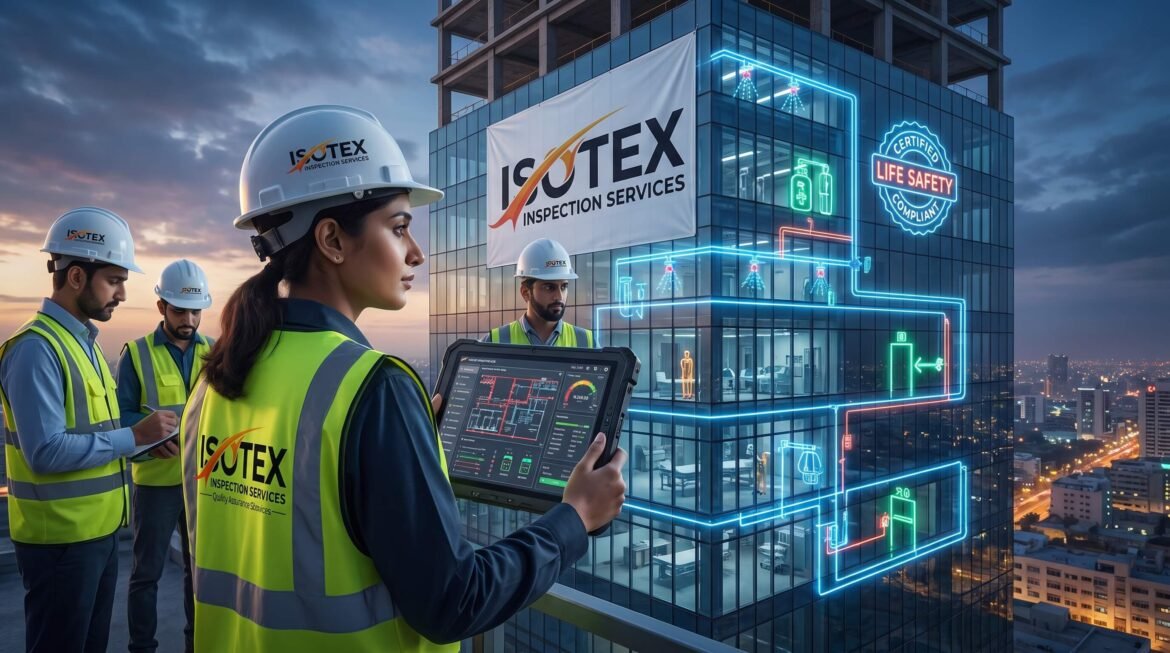
”Implementing fire safety guidelines for hospitals, schools, and public plazas is never merely a compliance checklist; it is an active, ongoing commitment to preserving human life. When we examine buildings where large numbers of people gather daily, the stakes are exceptionally high. Unlike standard office spaces where occupants can quickly walk out during an emergency, high-occupancy public facilities house vulnerable individuals, young students, patients, and massive crowds who often depend entirely on robust structural safety and well-planned emergency protocols. Adhering strictly to these professional fire safety guidelines ensures that facility managers are always prepared for unexpected hazards. Ultimately, following established fire safety guidelines is essential for safeguarding lives, minimizing operational risks, and securing long-term operational trust.”
Applied Codes and Standards!
NFPA 101 (Life Safety Code)
NFPA 72 (National Fire Alarm and Signaling Code)
NFPA 99 (Health Care Facilities Code)
NFPA 1 (Fire Code)
NFPA 10 (Portable Fire Extinguishers)
NFPA 13 (Standard for the Installation of Sprinkler Systems)
NFPA 90A (Standard for the Installation of Air-Conditioning and Ventilating Systems)
OSHA Life Safety Regulations ISO 45001 (Occupational Health and Safety)
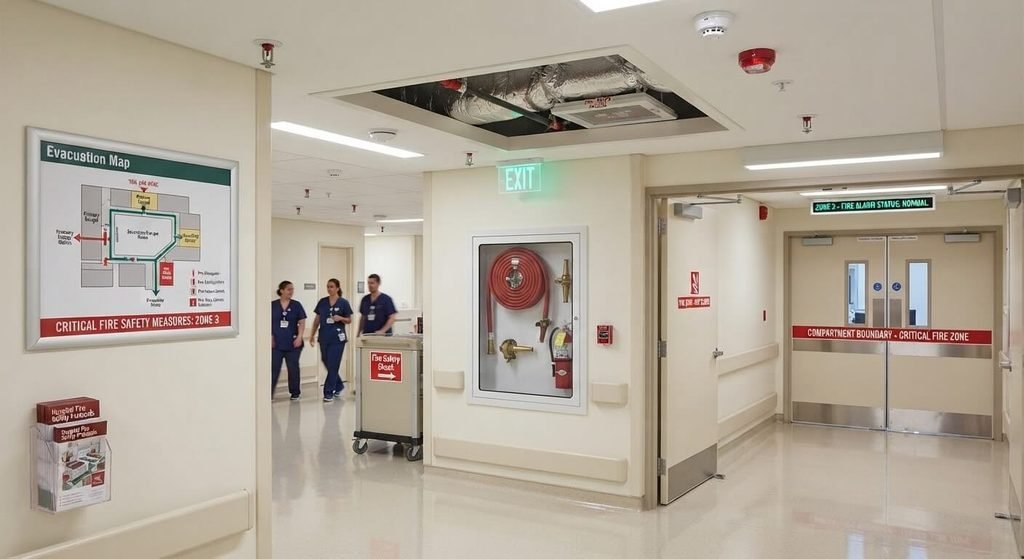
Comprehensive Fire Safety Guidelines and Critical Fire Safety Measures in Hospitals & Healthcare Facilities
Healthcare facilities represent zero-tolerance zones when it comes to fire hazards. Because patients, newborns in nurseries, and individuals in intensive care units (ICUs) are largely non-ambulatory or dependent on life support, traditional evacuation methods simply do not apply, adhering strictly to standards outlined in NFPA 99.
Medical Gas and Oxygen Control:
Medical environments rely heavily on oxygen supply lines. In the event of a fire, oxygen accelerates combustion rapidly. Implementing automatic shut-off systems that isolate gas lines during a pressure drop or emergency is critical to preventing rapid fire expansion.
Electrical Infrastructure and Continuous Loads:
Hospitals run heavy-duty medical machinery and continuous air-conditioning units around the clock. Routine thermal imaging and thorough electrical audits help detect overloaded circuits, faulty wiring, or overheating components long before they trigger a spark.
Compartmentalization and Safe Relocation:
Moving bedridden patients quickly is extremely difficult. Effective hospital design relies on fire-rated doors and strict compartmentalization to trap smoke and flames in a single zone, allowing staff to horizontally relocate patients to safety rather than navigating smoke-filled stairwells immediately.
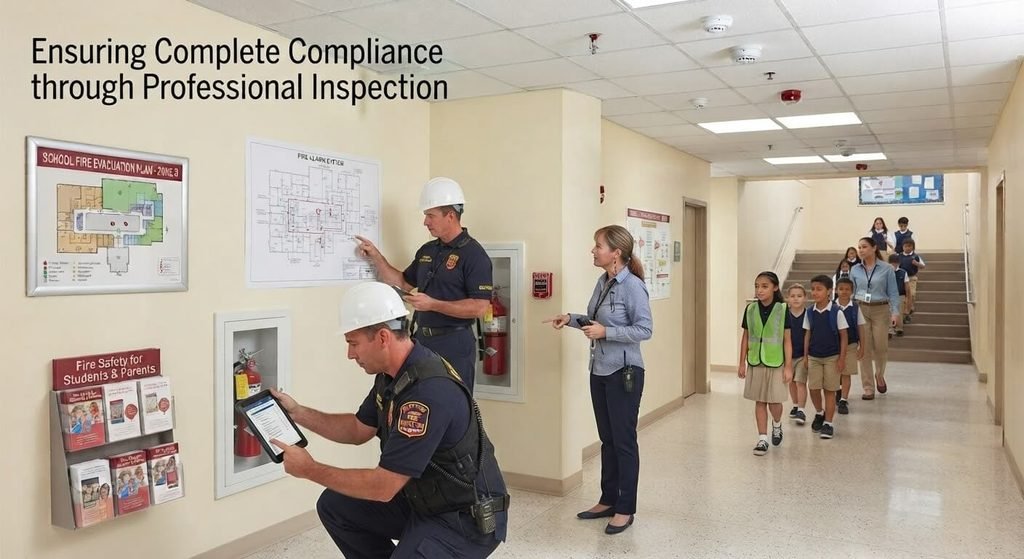
Essential Fire Protection Protocols for Educational Institutes and Schools
Schools, colleges, and universities welcome thousands of young minds every day. Protecting these institutions requires child-centric safety designs and proactive preparedness governed by educational occupancy chapters in NFPA 101 that account for energetic student behavior during sudden panic.
Unobstructed Evacuation Routes:
Corridors, stairwells, and emergency exits must remain wide, unlocked, and completely free of storage boxes or furniture. Clear, highly visible photoluminescent exit signs ensure that students and teachers can find their way out even if power fails or thick smoke reduces visibility.
Laboratory and Library Protection:
Chemistry and physics labs house reactive chemicals and compressed gas cylinders. Maintaining dedicated safety gear, including correctly rated fire extinguishers (CO_2 and dry powder) and fire blankets, ensures that localized lab incidents are contained instantly.
Reliable Early Warning Systems:
Automated smoke detectors, heat sensors, and localized alarm triggers must be installed across every floor in compliance with NFPA 72. A timely, campus-wide alert gives teachers the critical seconds needed to lead orderly evacuation drills.

Managing Fire Risks and Egress in Shopping Malls and Public Plazas
Commercial plazas and shopping malls present a unique set of challenges due to high foot traffic, fluctuating visitor numbers, and complex structural layouts that unguided shoppers are unfamiliar with, requiring strict adherence to assembly occupancy standards.
Crowd Management and Egress Capacity:
During a busy weekend, thousands of shoppers fill a single mall. Exit doors must swing outward, remain unlocked during business hours, and offer sufficient capacity to handle mass crowds without causing dangerous bottlenecks.
Commercial Kitchen and Storage Risks:
Food courts with open flames, heavy-duty fryers, and gas lines introduce significant kitchen fire risks that require specialized suppression systems like hood suppression units. Additionally, back-of-house storage rooms packed with cardboard and retail inventory need strict clearance zones.
Mechanical Smoke Extraction:
Large atriums in modern malls can act like chimneys, drawing smoke upward. Installing mechanical smoke extraction fans and automatic fire-rated shutters prevents smoke from blinding upper levels and blocking escape routes.

Emergency Response, Standard Operating Procedures (SOPs), and Training
Even the most advanced fire protection technology remains ineffective if the people inside do not know how to respond when an emergency strikes.
Unannounced Practical Drills:
Regular, unannounced fire drills for hospital nursing staff, school faculty, and mall management build muscle memory. Routine practice eliminates panic and trains teams to execute evacuations smoothly.
In-House First-Responder Teams:
Every major public facility should maintain a trained internal fire-fighting and rescue unit. These teams handle initial containment using portable extinguishers and assist municipal fire departments the moment they arrive.
Regular Third-Party Inspections:
Facility managers must partner with certified inspection experts to test sprinkler flows, alarm circuits, emergency lighting batteries, and fire pumps on a fixed schedule.

Ensuring Complete Compliance Through Professional Inspection
Transforming safety guidelines from theory into reliable protection requires rigorous evaluation by certified specialists. Facility owners and managers looking to verify their fire safety systems, conduct third-party audits, or schedule equipment testing can rely on professional services like Isotex Inspection Services to ensure full code compliance and absolute peace of mind.
Ensuring public safety requires shifting our perspective from temporary regulatory paperwork to an ongoing culture of prevention, strictly driven by robust fire safety guidelines. By implementing rigorous engineering controls, maintaining clear evacuation pathways, and enforcing strict safety protocols in hospitals, schools, and commercial plazas through comprehensive fire safety guidelines, we protect our communities and ensure that every visitor returns home safely while adhering to standard fire safety guidelines.

The Cost of Compromise: Why Professional Fire Safety Audits Matter in Pakistan
Safeguarding high-occupancy public facilities requires an uncompromising shift from basic regulatory paperwork to an active, proactive culture of safety and prevention. In recent years, the rapid and continuous boom of high-rise buildings, commercial plazas, and multi-story complexes across Pakistan constructed largely without adequate oversight—has highlighted a critical vulnerability: majestic concrete structures are frequently erected while fire safety and emergency infrastructure are treated as mere afterthoughts.
Tragic historical precedents and recent catastrophes—such as the devastating blaze at Gul Plaza, the horrific industrial tragedy in Baldia Town, and the alarming PIMS Hospital fire incident that shook the healthcare sector—paint a grim picture of the heavy price paid for lax safety protocols, compromised building materials, fake compliance certificates, and the dangerous habit of ignoring mandatory fire safety guidelines. When facility owners skip proper safety installations, block emergency exits, or bypass independent technical evaluations to save costs while failing to implement proper fire safety guidelines, they turn commercial spaces, hospitals, and schools into potential hazard zones where hundreds of lives hang in the balance.”
To break this recurring cycle of preventable disasters, a proactive engineering approach must become mandatory from the ground up, strictly guided by robust fire safety guidelines. Property owners, developers, and institutional management must engage certified third-party inspection companies right from the under-construction phase of any new hospital, educational campus, or public plaza to ensure every structure complies with international fire safety guidelines. By bringing in professional technical experts early and adhering closely to these established fire safety guidelines, stakeholders can obtain accurate recommendations for fire-rated compartmentalization, automated sprinkler networks, adequate egress routes, and medical gas or kitchen suppression systems, making sure that implementation of proper fire safety guidelines remains the topmost priority.”
Transforming safety guidelines from theory into reliable protection requires rigorous evaluation by certified specialists. Facility owners and managers looking to verify their fire safety systems, conduct third-party audits, or schedule equipment testing can rely on professional services like Isotex Inspection Services to ensure full code compliance and absolute peace of mind. Shifting away from superficial paperwork toward true accountability ensures that our communities remain fully protected and that every visitor, patient, and student returns home safely.